Seat belts are one of the most important elements for protecting vehicle occupants. Although they all serve the same basic function, there are significant differences between 2-point and 3-point seat belts, both in their design and in their level of protection and applications.
Choosing the right system depends on the type of vehicle, the seating position, regulatory requirements, and the specific needs of the application.
What is a 2-point seat belt?
The 2-point belt, also known as an abdominal belt or lap belt, secures the occupant only at the waist using two anchor points.
This design was widely used for decades and is still a valid solution in certain applications where space, seat configuration or vehicle type make the installation of a three-point seat belt unfeasible.
Common applications
- Agricultural machinery.
- Forklifts.
- Commercial vehicles.
- Boats.
- Some buses and coaches.
- Classic and collector vehicles.
- Auxiliary seats and special applications.
Advantages
- Simple and robust design.
- Instalación rápida.
- Fewer components.
- Excellent solution for industrial applications.
- Great flexibility for OEM and retrofit projects.
Limitations
By only restraining the pelvis, the torso remains with greater freedom of movement during a collision. Therefore, it does not offer the same level of protection as a three-point seatbelt in frontal impacts.
What is a 3-point seat belt?
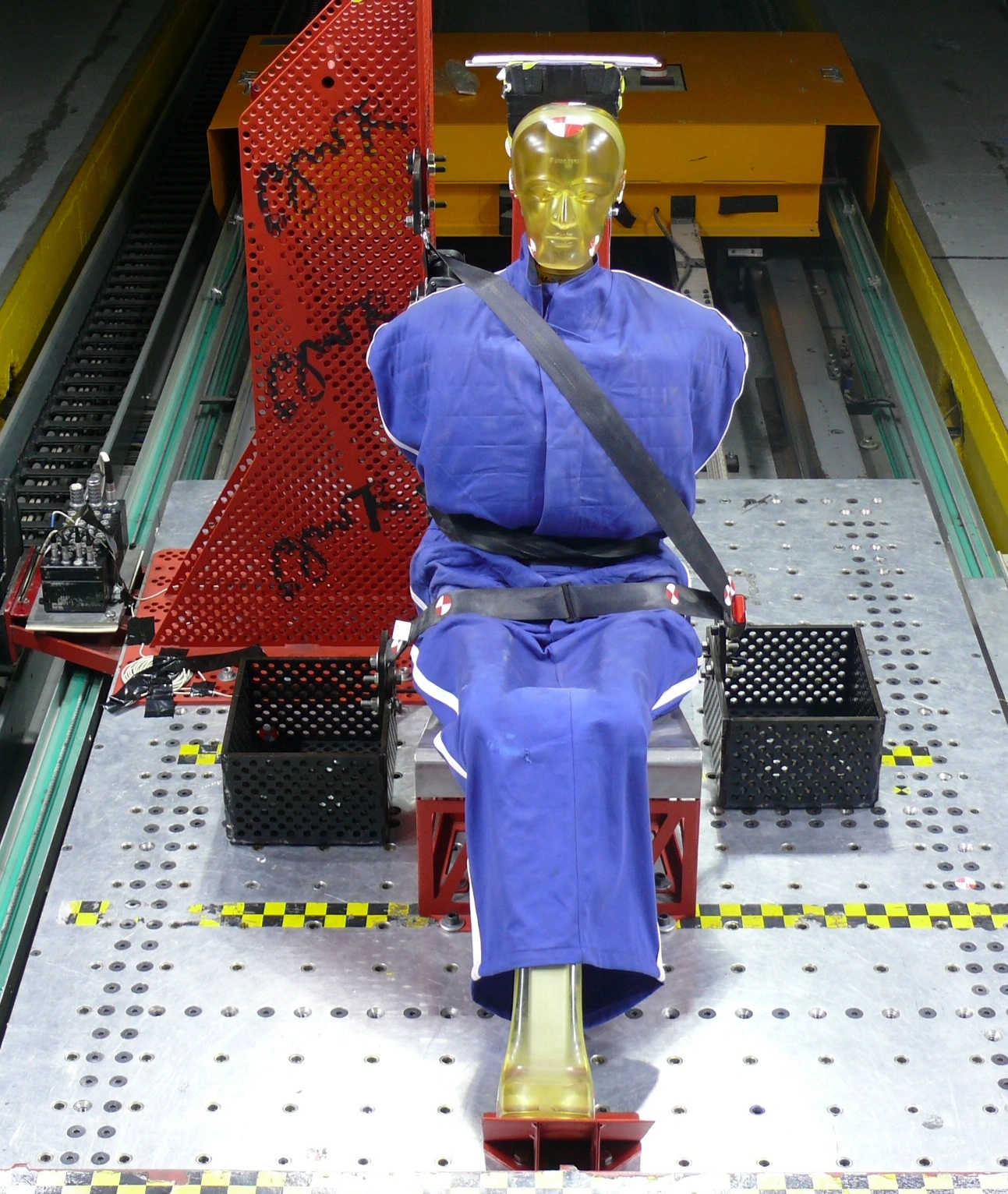
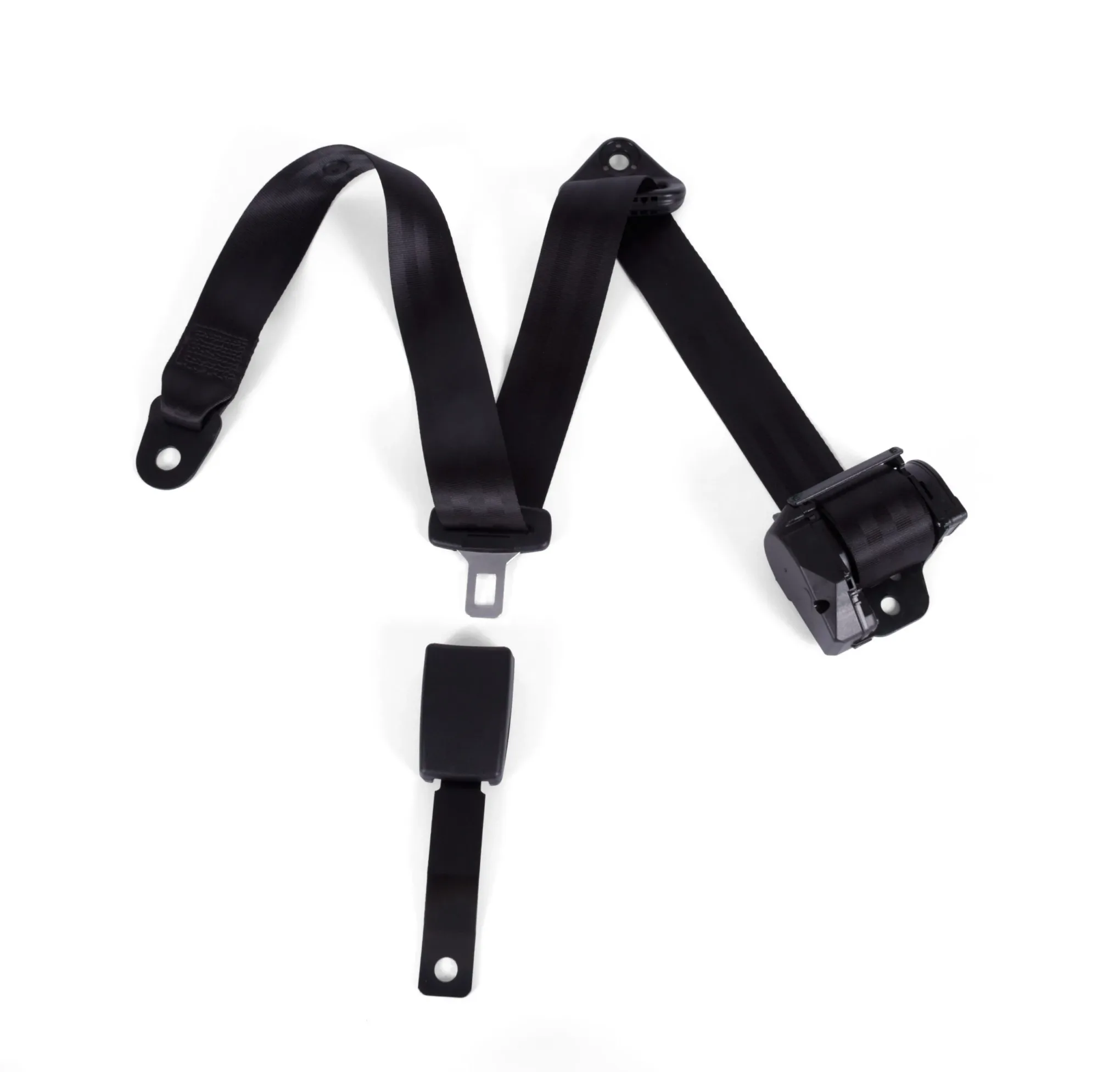
The 3-point seat belt incorporates a third anchor point over the shoulder, distributing the impact forces between the pelvis, chest, and shoulder.
This design, introduced to the automotive industry more than half a century ago, has become the standard for passenger vehicles due to its high effectiveness in reducing injuries.
Common applications
- Automobiles.
- Trucks.
- Vans.
- Buses.
- Motorhomes.
- Special vehicles.
- OEM equipment.
Advantages
- Greater protection in frontal impacts.
- Better distribution of deceleration forces.
- Reduce torso movement.
- It increases comfort while driving.
- It meets the requirements of most regulations for road vehicles.
Which is the safest option?
Whenever the vehicle structure allows it, the 3-point seat belt offers a higher level of protection by limiting torso movement and better distributing loads during an accident.
However, this does not mean that a 2-point seatbelt is an unsuitable solution. There are numerous applications where this design remains the correct option for technical, homologation, or vehicle architecture reasons.
In agricultural machinery, forklifts or certain industrial vehicles, a properly installed and certified two-point seat belt provides a safe solution that complies with the manufacturer’s requirements.
Factors to consider when choosing a seat belt
Before selecting a retention system, it is advisable to consider:
- Vehicle type.
- Seat position.
- Intended use of the vehicle.
- Space available for anchors.
- Applicable regulations.
- Compatibility with ROPS structures or cabins.
- OEM or retrofit approval requirements.
The importance of certification
Not all seat belts offer the same guarantees. It is essential to choose products that comply with applicable international standards and have undergone resistance and durability testing.
At GSB we design and manufacture safety belts for industrial, commercial and special applications that meet the most demanding international standards, including:
- SAE J386
- ECE R16
- FMVSS 209/302
In addition, we offer customized solutions for manufacturers (OEMs), distributors, and replacement or retrofit projects.
Do you need help choosing the right belt?
Each vehicle has different requirements. Our engineering team can help you select the most suitable configuration based on the application, available anchor points, and certification requirements.
If you are developing a new vehicle or need to replace an existing system, contact us to receive technical advice and a solution adapted to your project.